Dead Lift
Edmond de Rothschild Center
2022


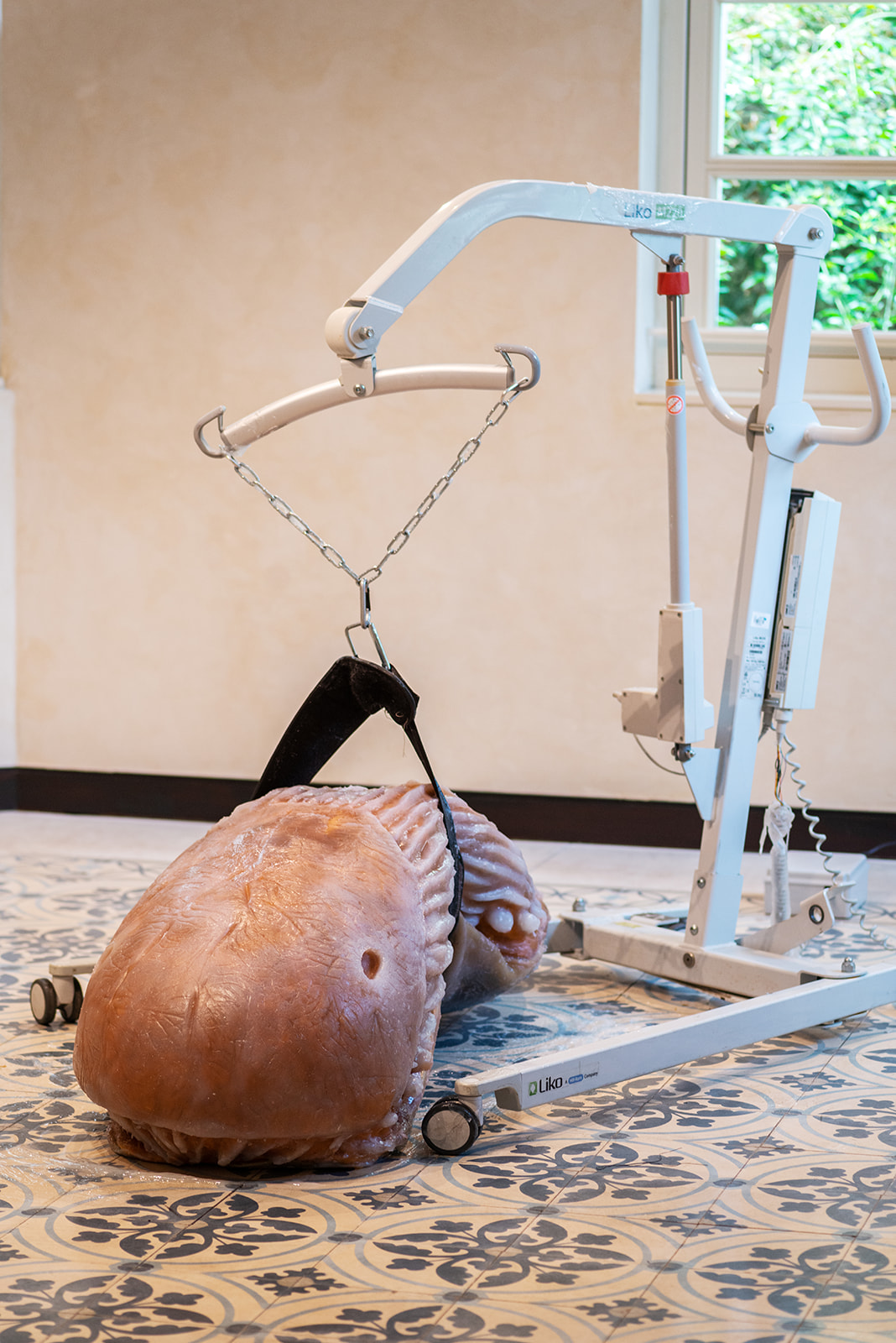


Dead Lift is a kinetic sculpture consisting of a readymade lifting crane that alternately raises and lowers a slug-like lump suspended by a deadlift belt. The crane belongs to Itamar's father, who was paralyzed from the waist down following a bicycle accident. His father's injury, which forced the artist to reconsider a complicated and deferred relationship underscored by masculinity and unfulfilled expectations, is woven through his experience as a gay man.
A recently established fixture of Western economies of spectacle and seduction, the Gay Man runs from impotence with every deadlift. But behind every deadlift is its direct mirror staring the lifter in the face: the deadweight symbolizing the body's inevitable impotence and decay. The power of spectacle, in which the artist is most interested in its gendered registers, “restricts the body over its evocation.” Yet waiting at the end of bodily servitude to commodity is nothing but old age and death. Perhaps only inside this place of undesirability are bonds formed, and we can begin to grasp one another, if only slightly.


Yoke / לוע, 2026
Carved Douglas fir, iron chain, bicycle rack, found cow piercing, Kryptonite lock fragments, bent iron rods
The Hebrew title - throat, gullet (לוע)- is an anagram of עול, yoke: the same letters, reversed. Like boustrophedon, the ancient writing method named after the ox turning at the end of a furrow, the word performs the movement it describes.
The sculpture is also the animal itself, taking on a zoomorphic form. It's carved from Douglas fir, warm wood like flesh, its bent iron rods suggesting limbs or horns. At its center hangs a bull-piercing, placed where a nose ring would be: the point of capture, the site where control enters the body. The Kryptonite lock fragments, taken from the street and bent to the scale of a human neck, compress a machine, person, and beast into a single object. Mounted on a bicycle rack, the work assembles the hardware of urban mobility and agricultural control into one form: a yoke that has become a body, a body that was always a tool, a tool waiting for someone to step inside it.


Exhibition
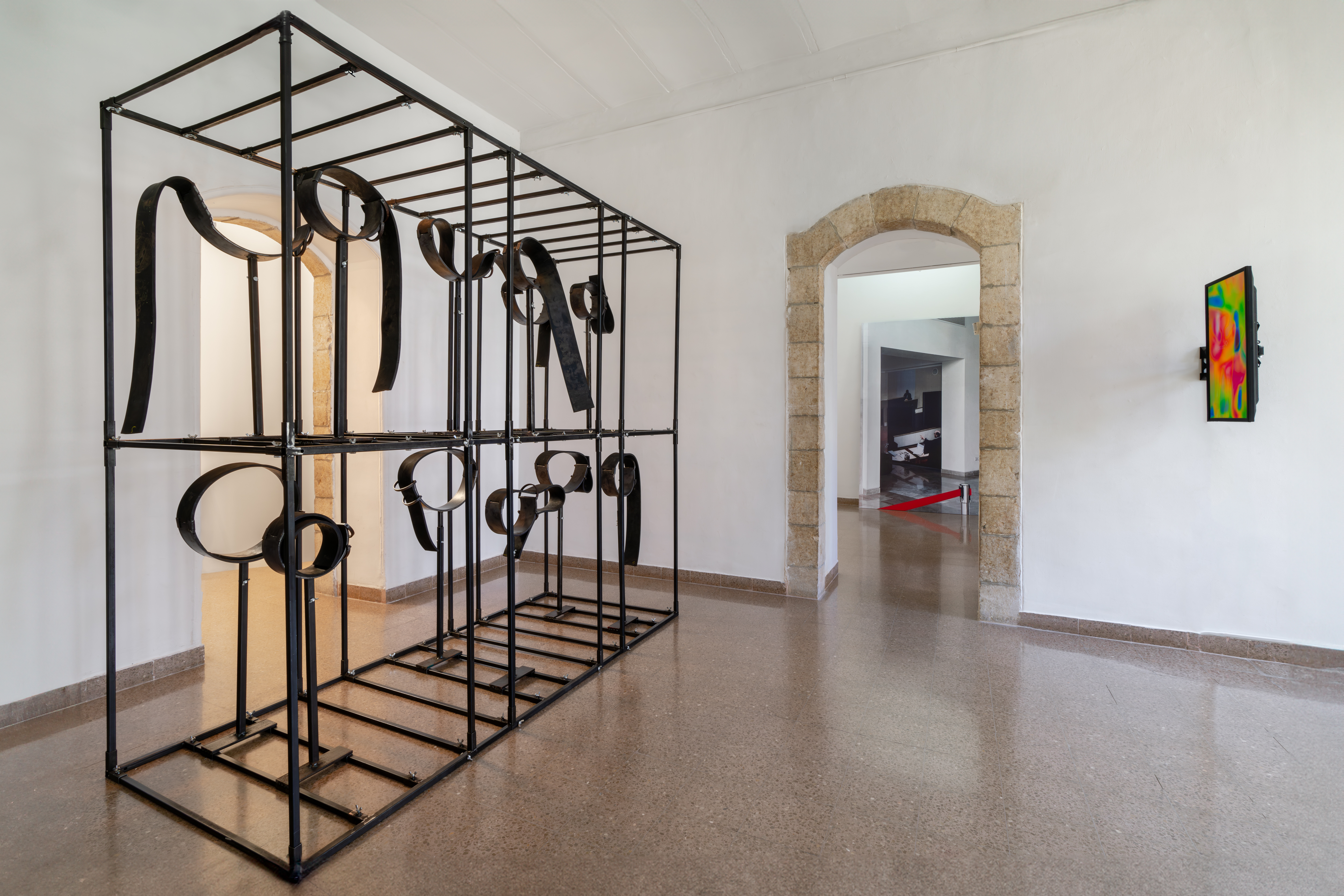
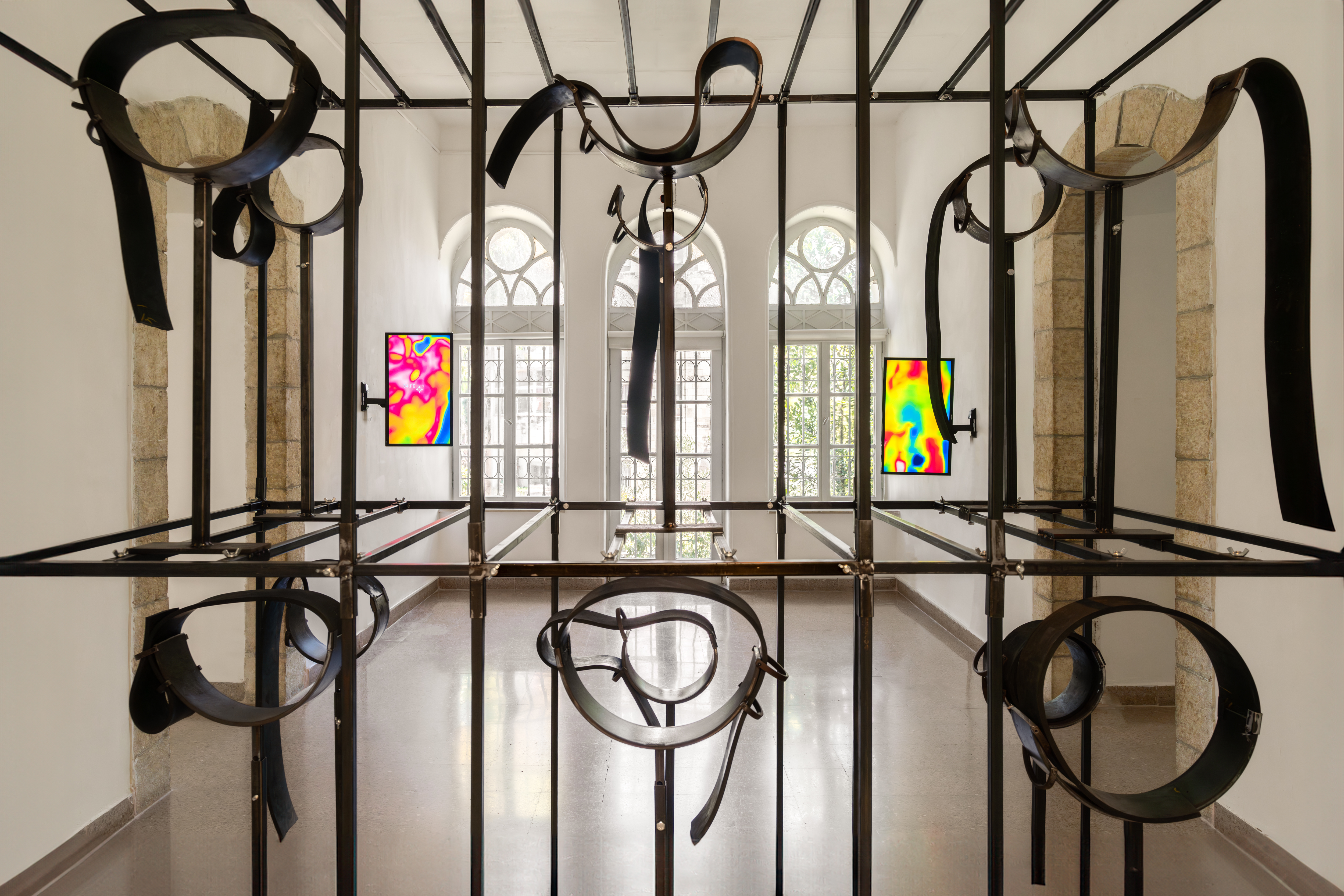
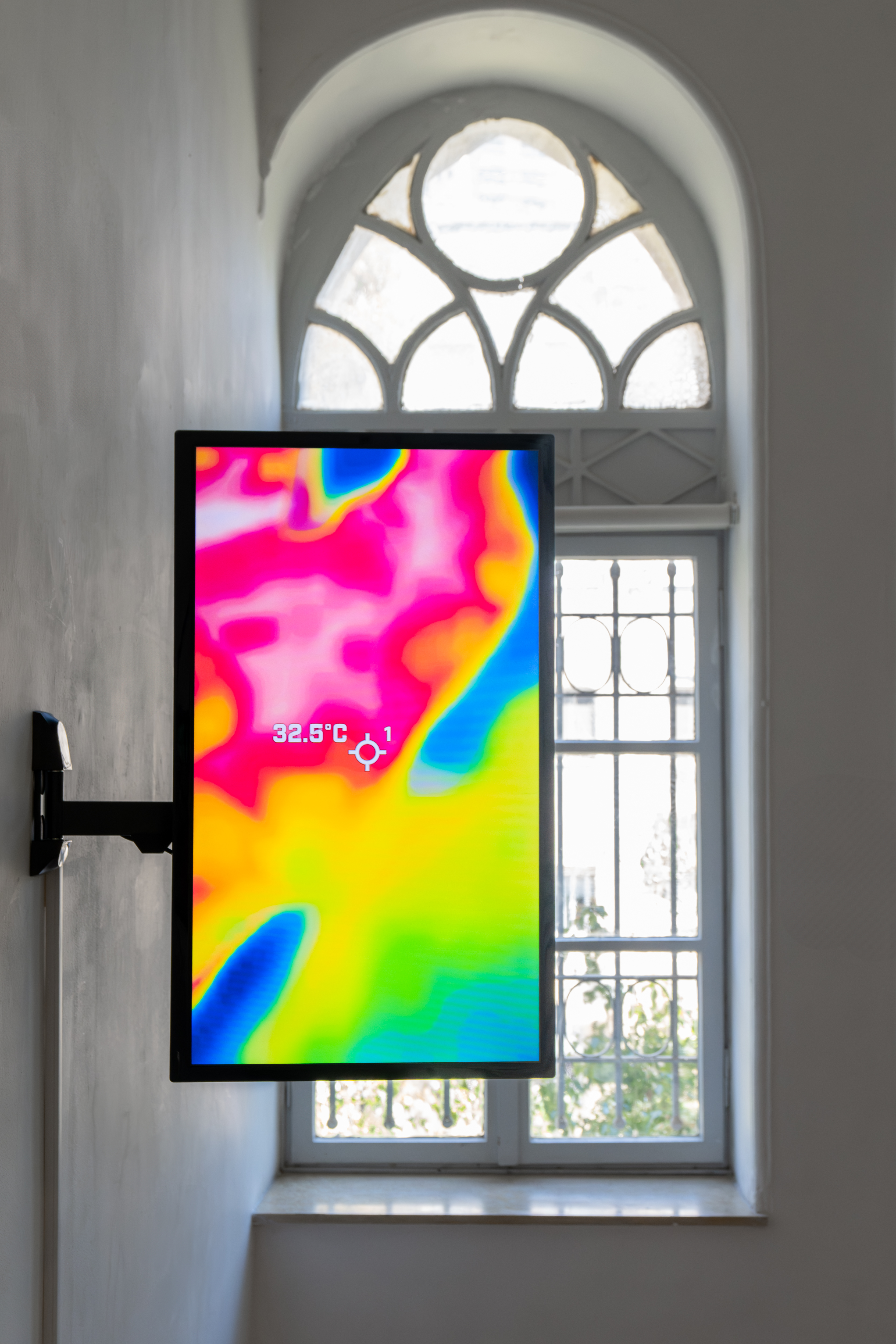
Thermal camera video, installation, arm holder, rubber, metal
Dimensions: 230 × 210 × 100 cm
Installation view
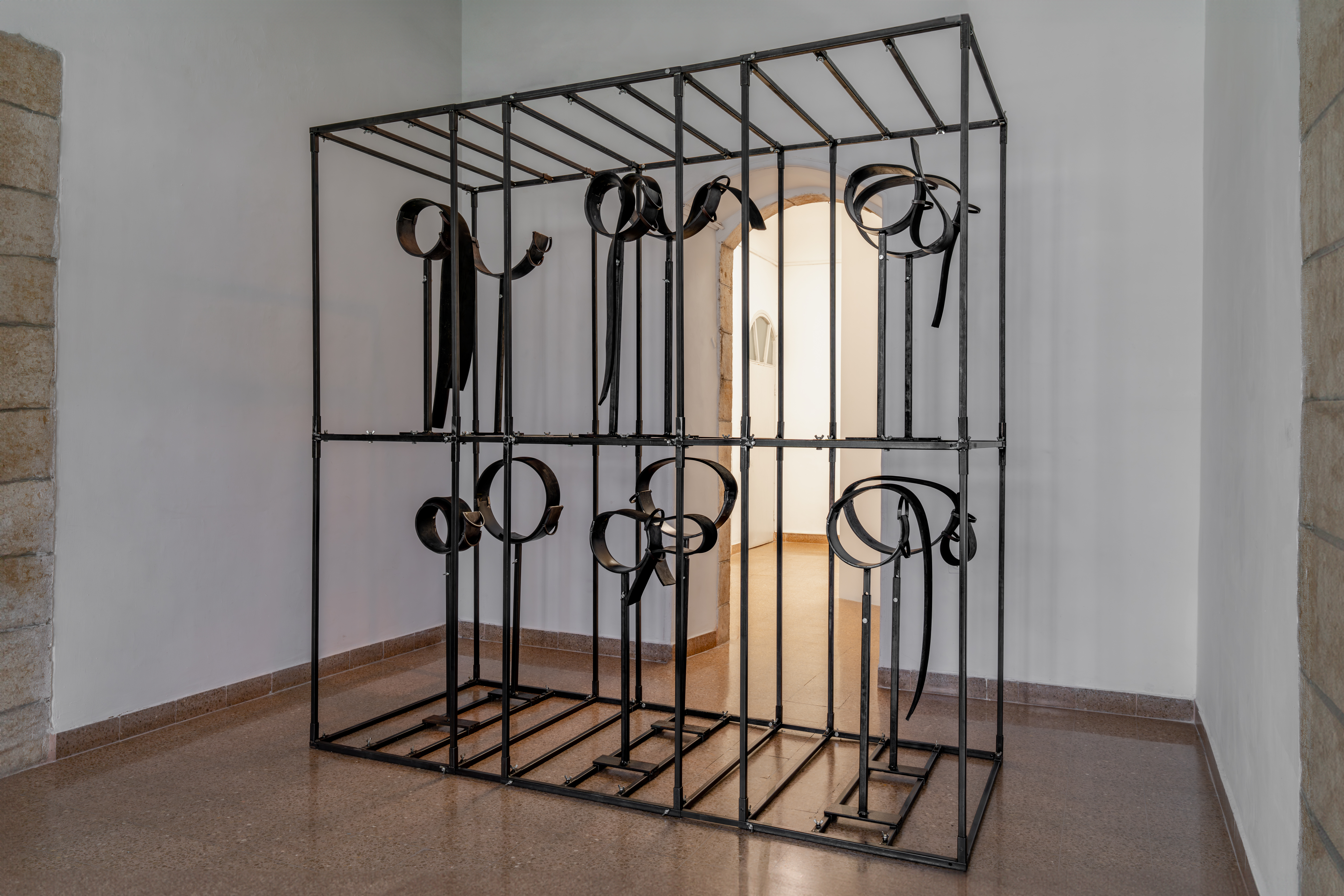
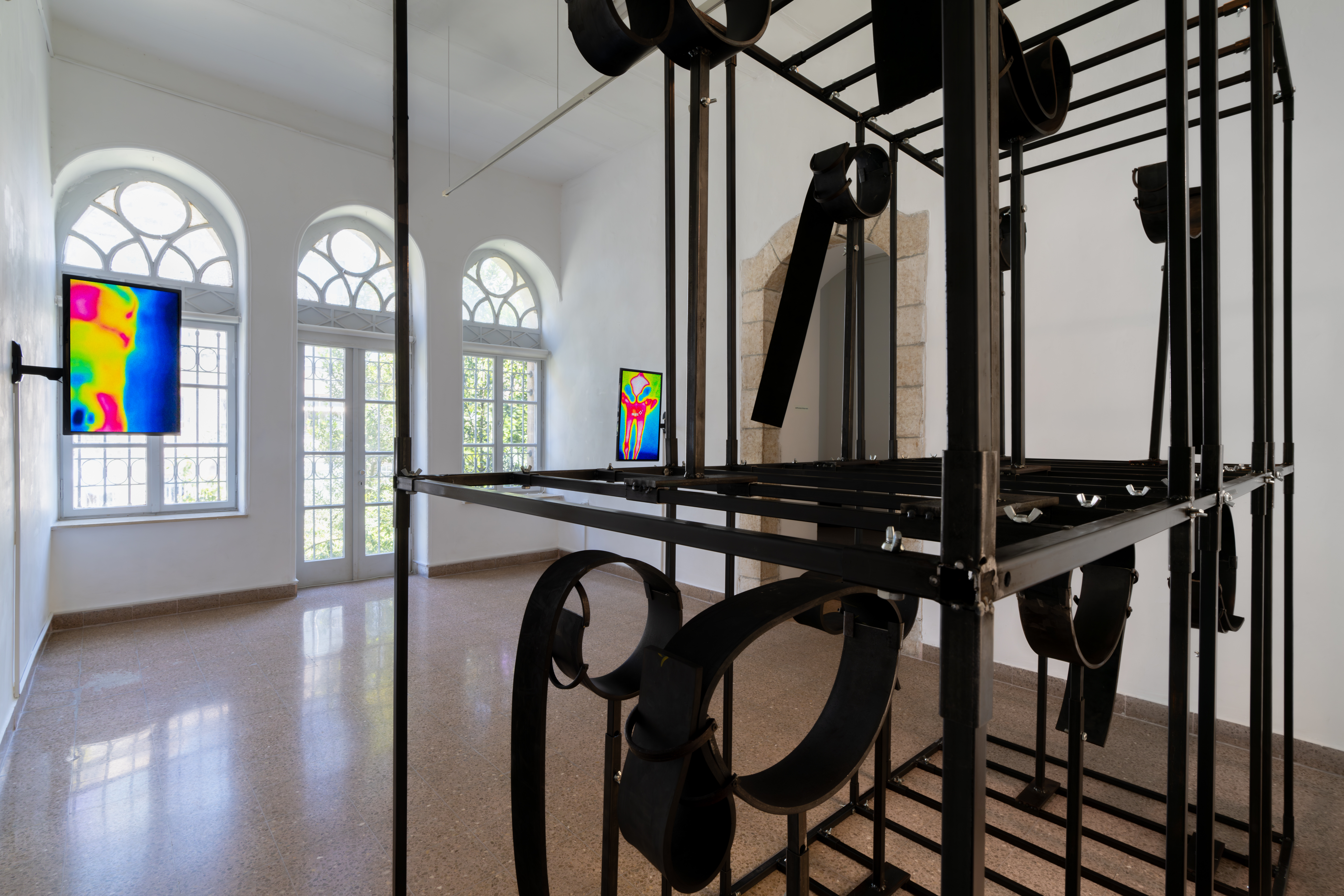
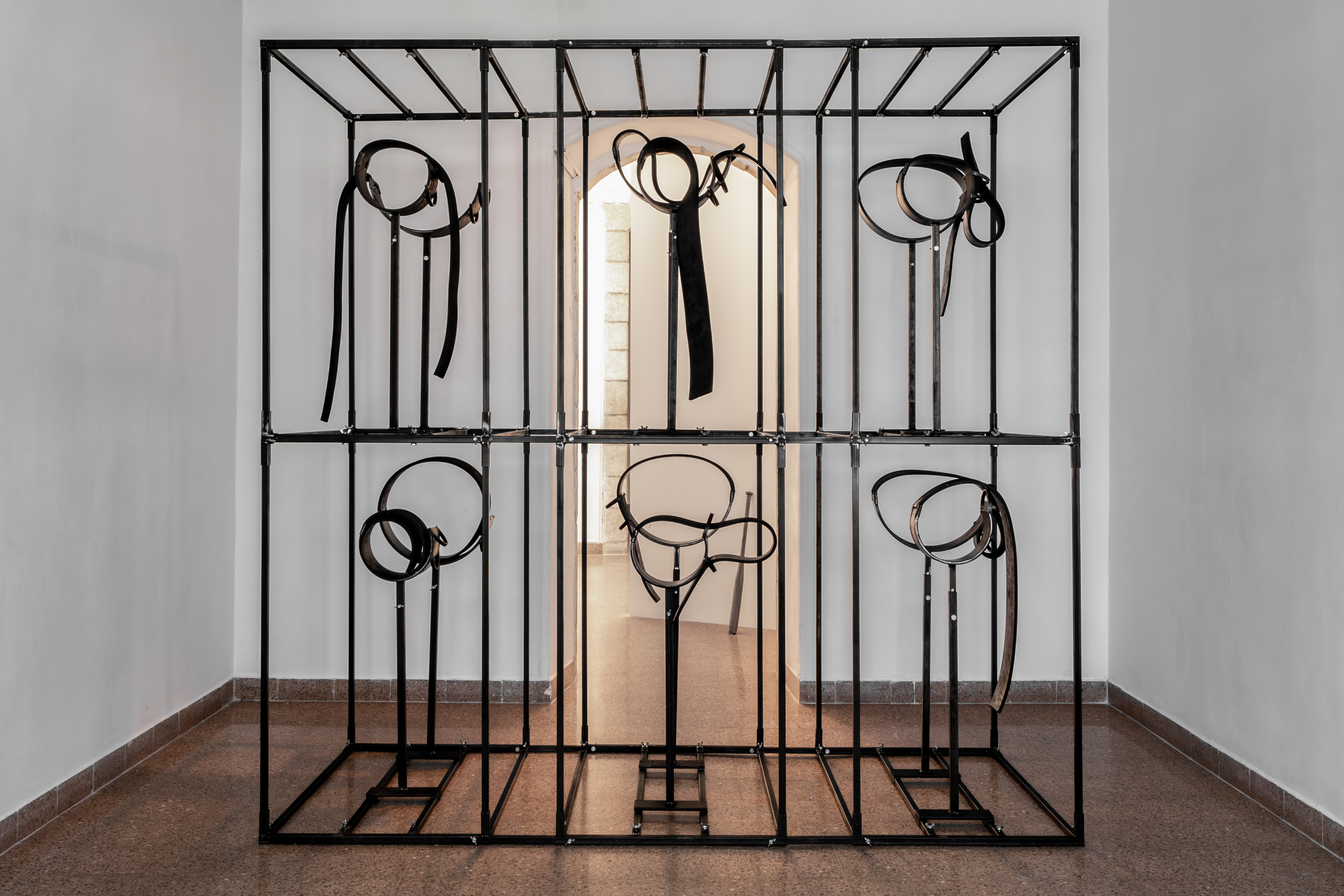
The project links the darkrooms of gay clubs with the world of purebred dog breeding. At its center is a human-scaled mating facility, replicated into interconnected units that recall Bentham’s panopticon. The industrial architecture creates a sterile infrastructure for intimacy, where bodies become subject to systems of observation, selection and control.
By bringing together the sexual economy of the darkroom and the breeding of animals, the installation considers the uneasy territory between desire and domination, freedom and obedience, consent and exploitation. The repetition of the units suggests a system that can reproduce itself indefinitely, turning intimacy into an infrastructure and bodies into something to be organized, observed and exchanged.



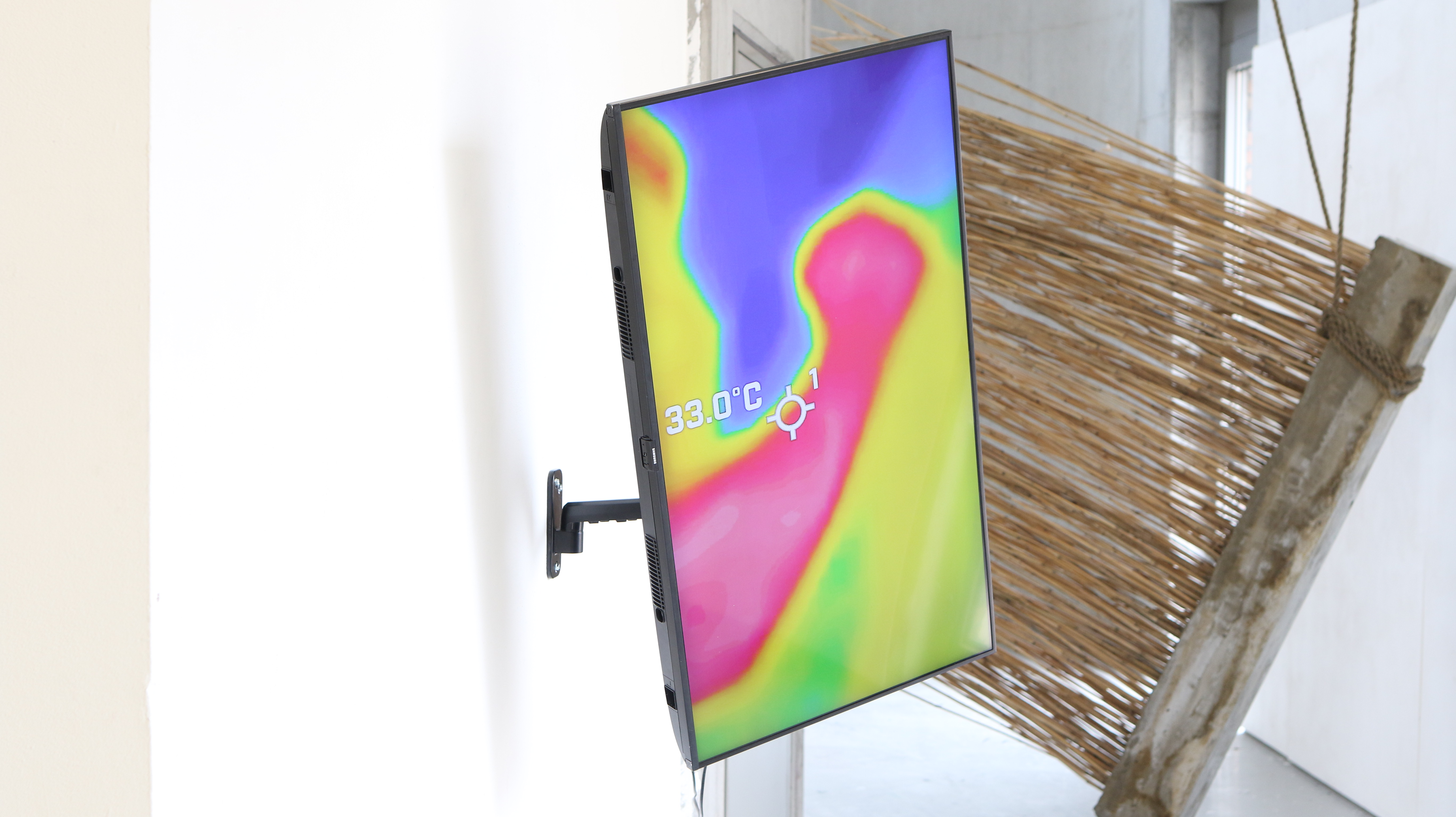
Masters (2024) is an MFA thesis exhibition examining control, surveillance, and sexuality within gay communities, particularly through the lens of fetish culture. The central video was filmed over eight months in Paris and Belgium using a thermal camera, capturing intimate encounters in darkrooms and gay parties.
The thermal image creates a strange distance from the bodies it records. What appears intimate becomes almost forensic: bodies reduced to heat, movement, and traces of presence. I became interested in the tension between these spaces as sites of sexual liberation and the systems of observation that exist within them.
The camera also became a form of protection. Behind it, I could enter these spaces as an apparently curious and accepting observer while remaining partially hidden. This produced an uncomfortable question: Am I also a transgressive predator in this setting?
The anonymity of the darkroom can offer freedom, but it can also produce detachment, where bodies become interchangeable objects of desire.
Rather than positioning surveillance as something imposed from outside, Masters asks how observation, desire, and self-surveillance can become embedded within the spaces in which we seek freedom.
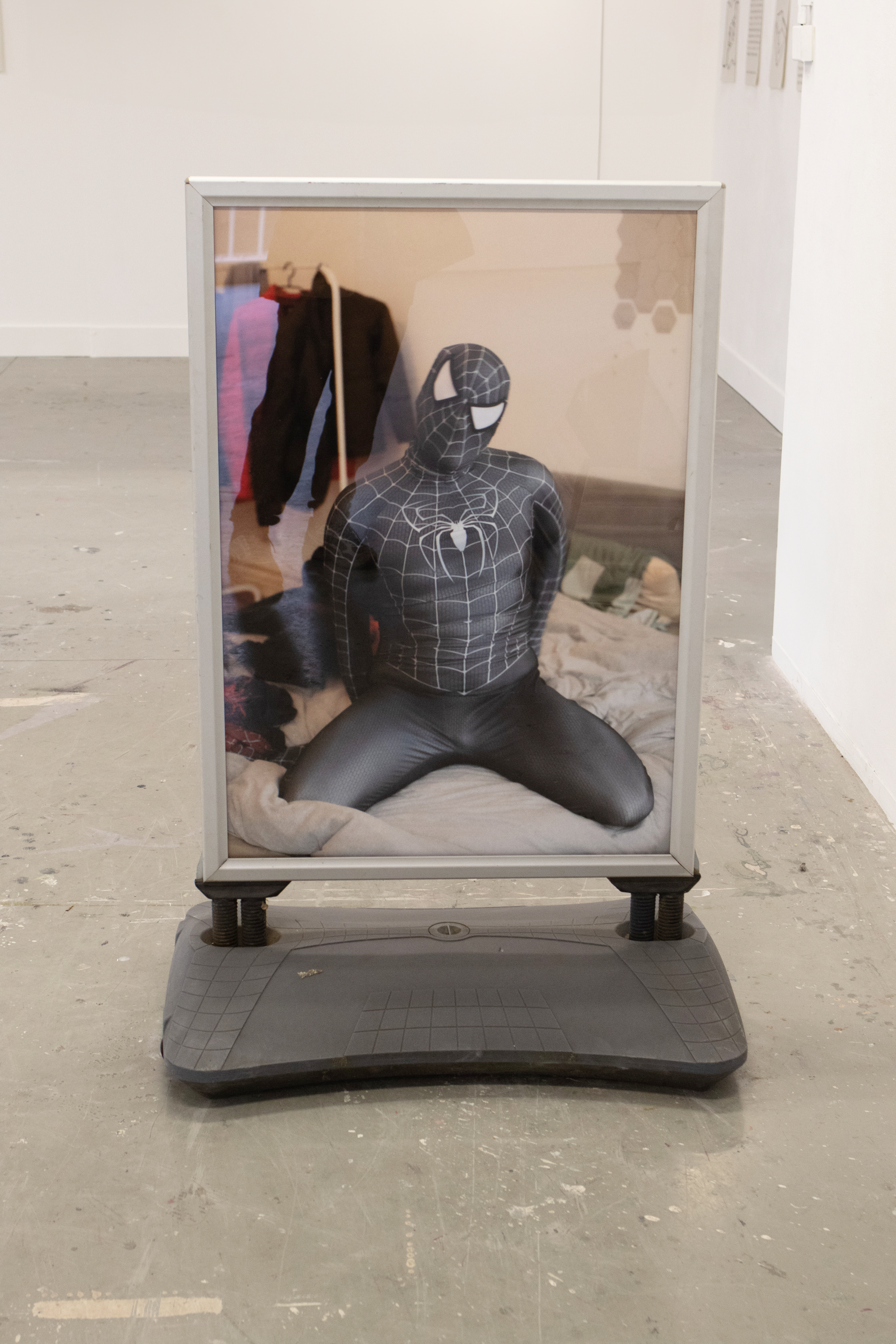
-------------------------------- Spiderman (Darkweb)
2024
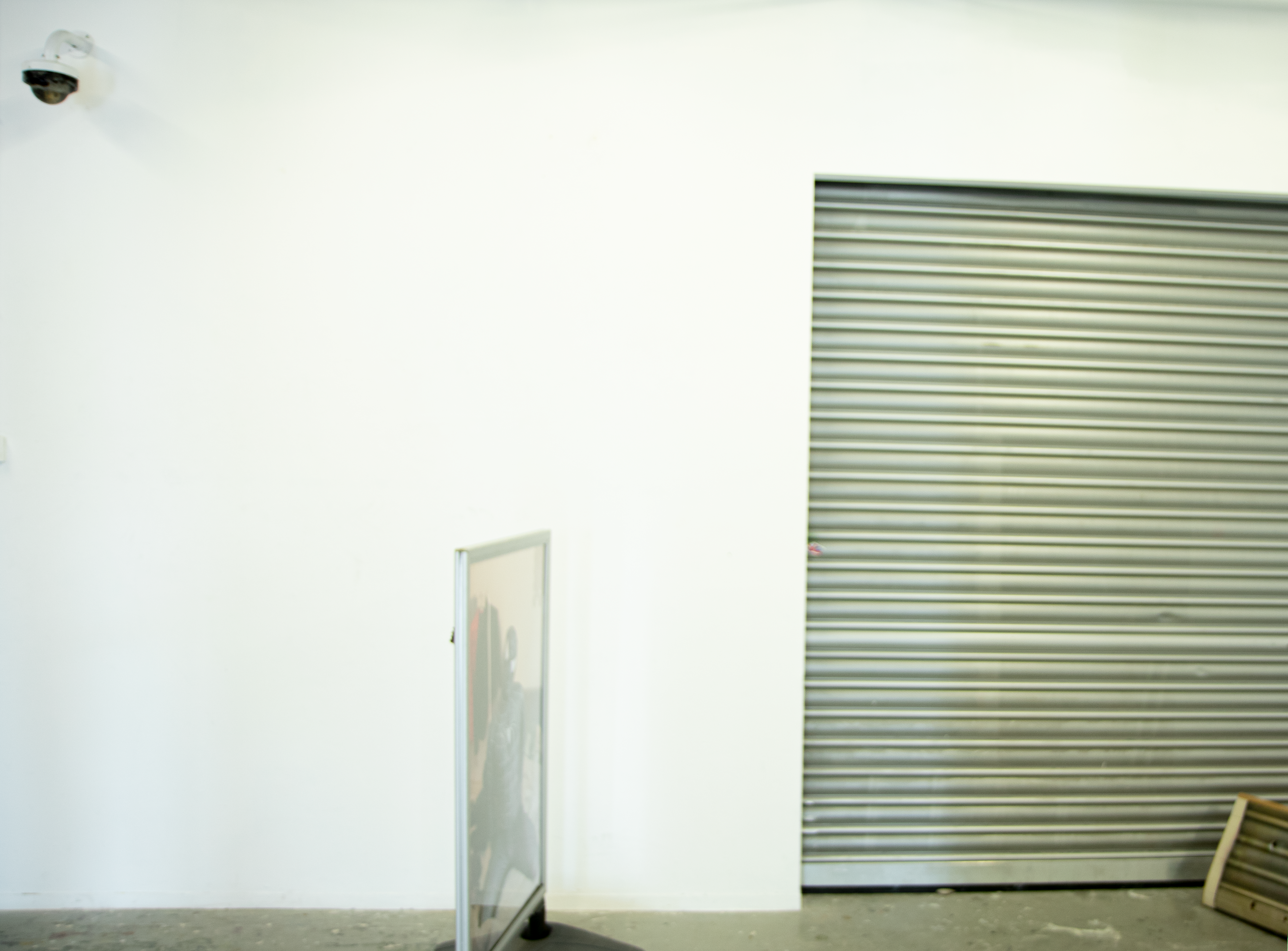
found poster stand, color print (101×71 cm),
acrylic glass, cardboard.
Installation view/detail
During one of my trips through gay darkrooms, I encountered a man dressed as Spider-Man and invited him to my room for an intimate photoshoot.
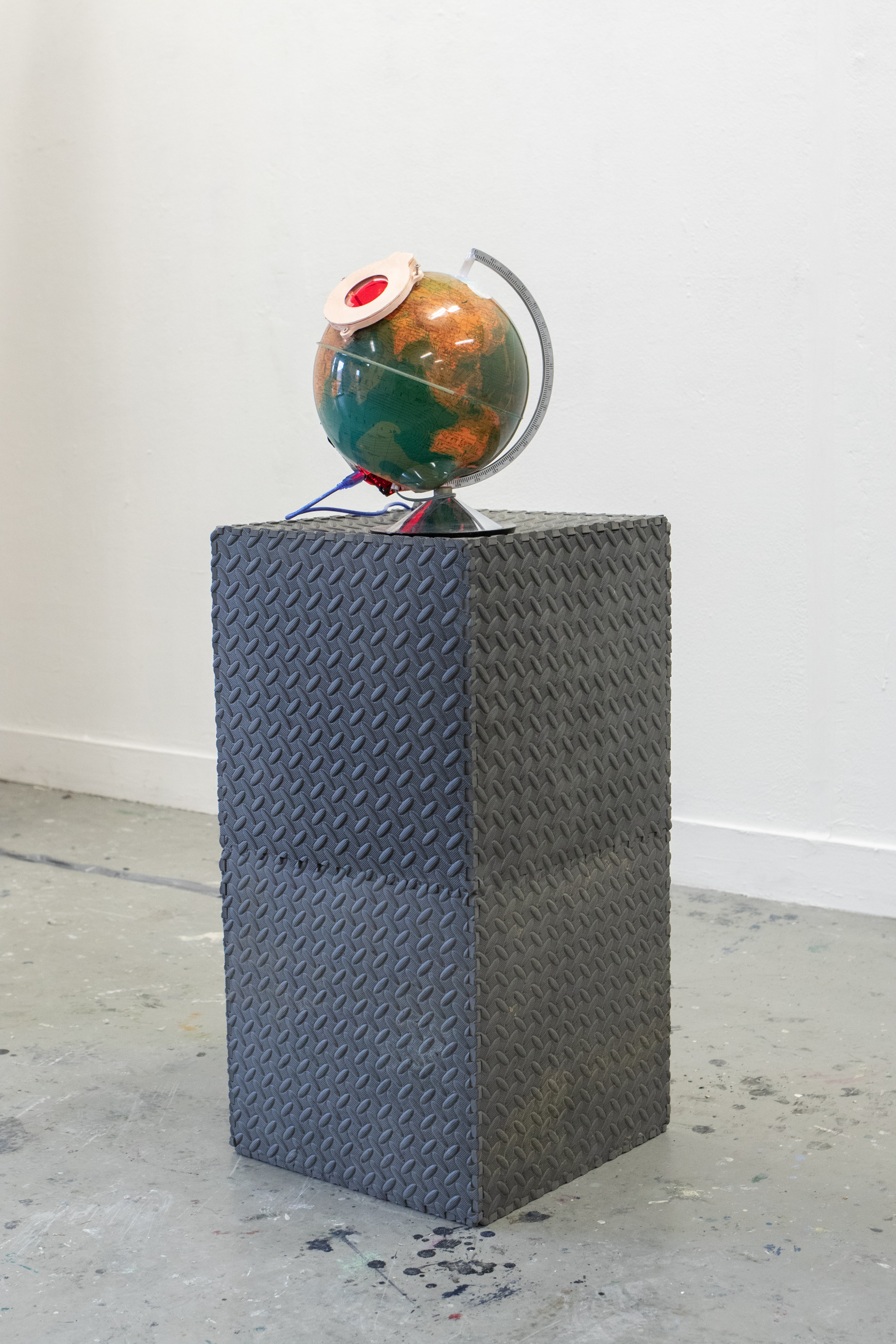
L’Origine du monde
2022
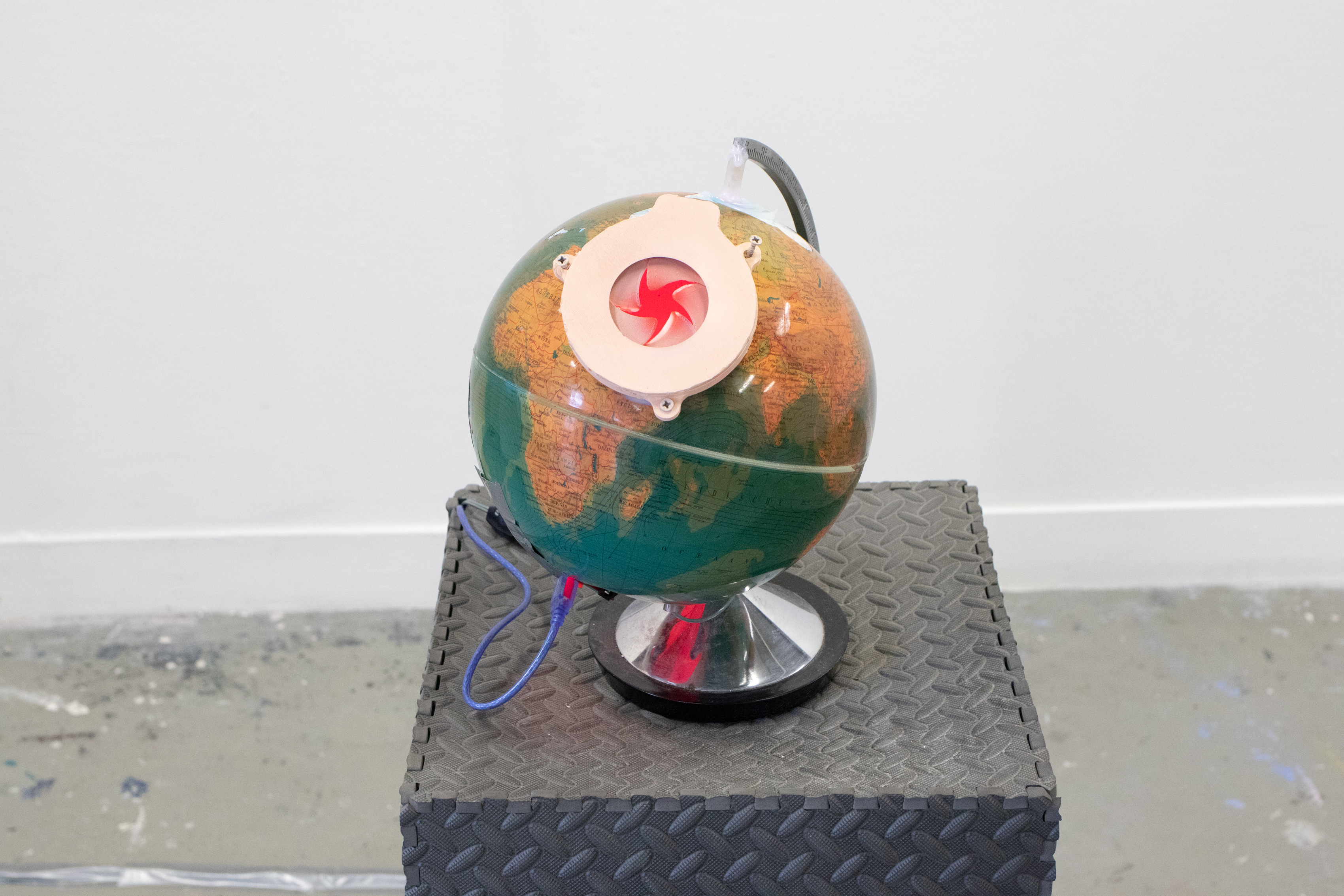
found globus, 3d download, arudiono, red installation view
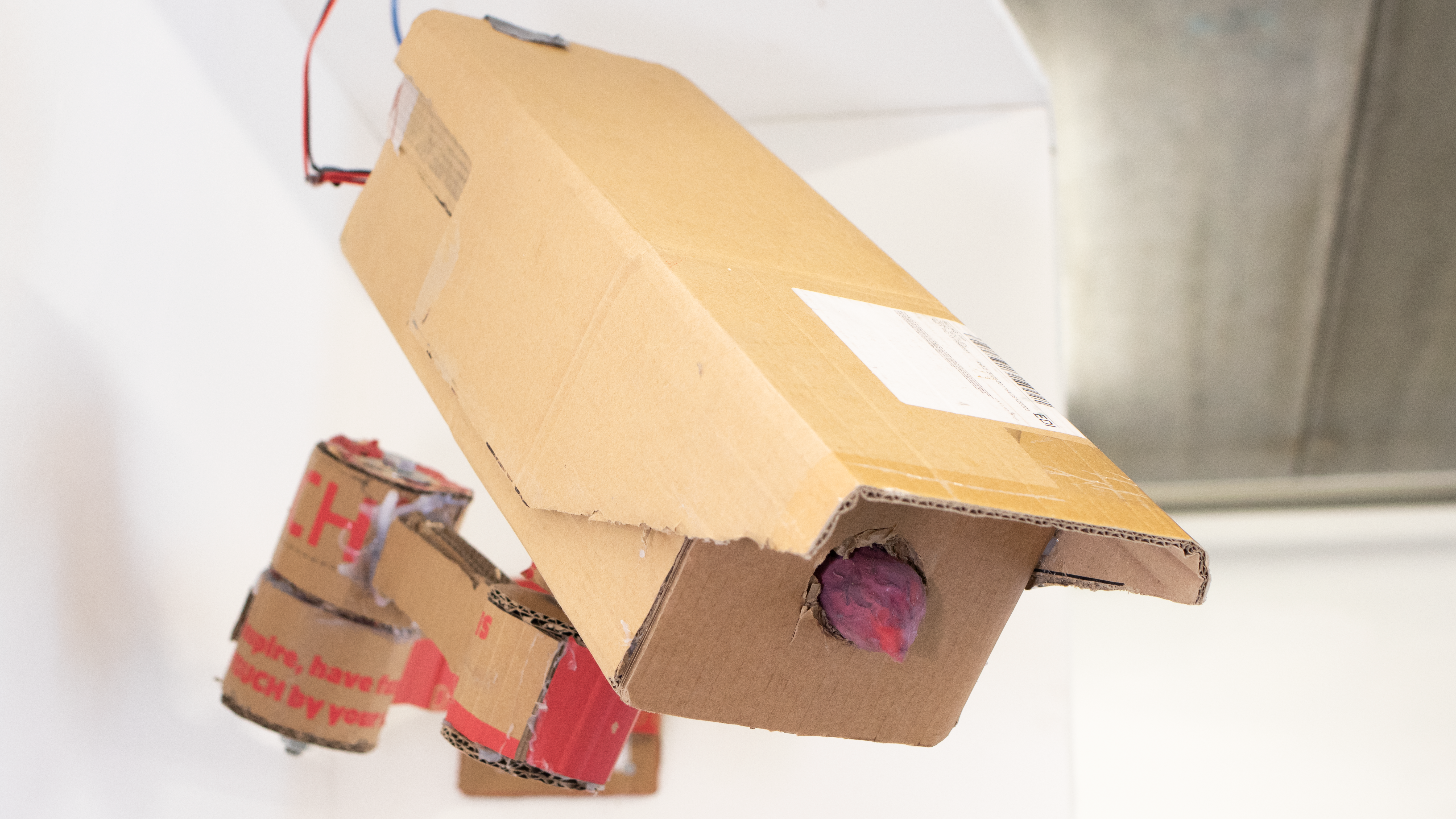
While developing works like “Masters,” which explore themes of surveillance and sexuality, I created more works like this shutter iris mechanism artfully painted to resemble an anus. This design is a metaphor for the invasive gaze in today’s media- saturated era. Additionally, I symbolically cut a hole in a globe over the Middle East, reflecting on the pervasive scrutinyI experienced as an Israeli student. This sculpture allowed me to deal with the complexities of identity, privacy, and personal expression amidst a backdrop of constant observation in a parodical way.
Fly on the Wall
video (4:45 min)
installation view
I found a man on Grindr whose practice is Japanese rope bondage, or shibari, and photographed his subjects. I invited him to my house, placed a green screen over my bed, and showed him a video of a spider constructing its web.
It made my bed symbolic of a spider, and I imagine myself as a fly caught in it, documenting the situation in which I was caught.
Masters
2024
, thermal camera video installation, arm holder (7:02), sound
Installation view
My project video, Masters (2024), explores the intersection of control, surveillance, and sexuality within gay communities, particularly through the lens of fetish culture. Using a thermal camera, I capture discrete moments in dark rooms and gay parties, immersing viewers in a visual exploration of surveillance in spaces traditionally considered private and liberating. The video delves into the complex relationship between individual autonomy
and social norms, highlighting the balance between liberation and objectification. Filmed over eight months in Paris and Belgium, the work challenges accepted norms
within the gay community and raises critical ethical questions about privacy and consent, revealing deeper layers of voyeurism, identity, and free will.
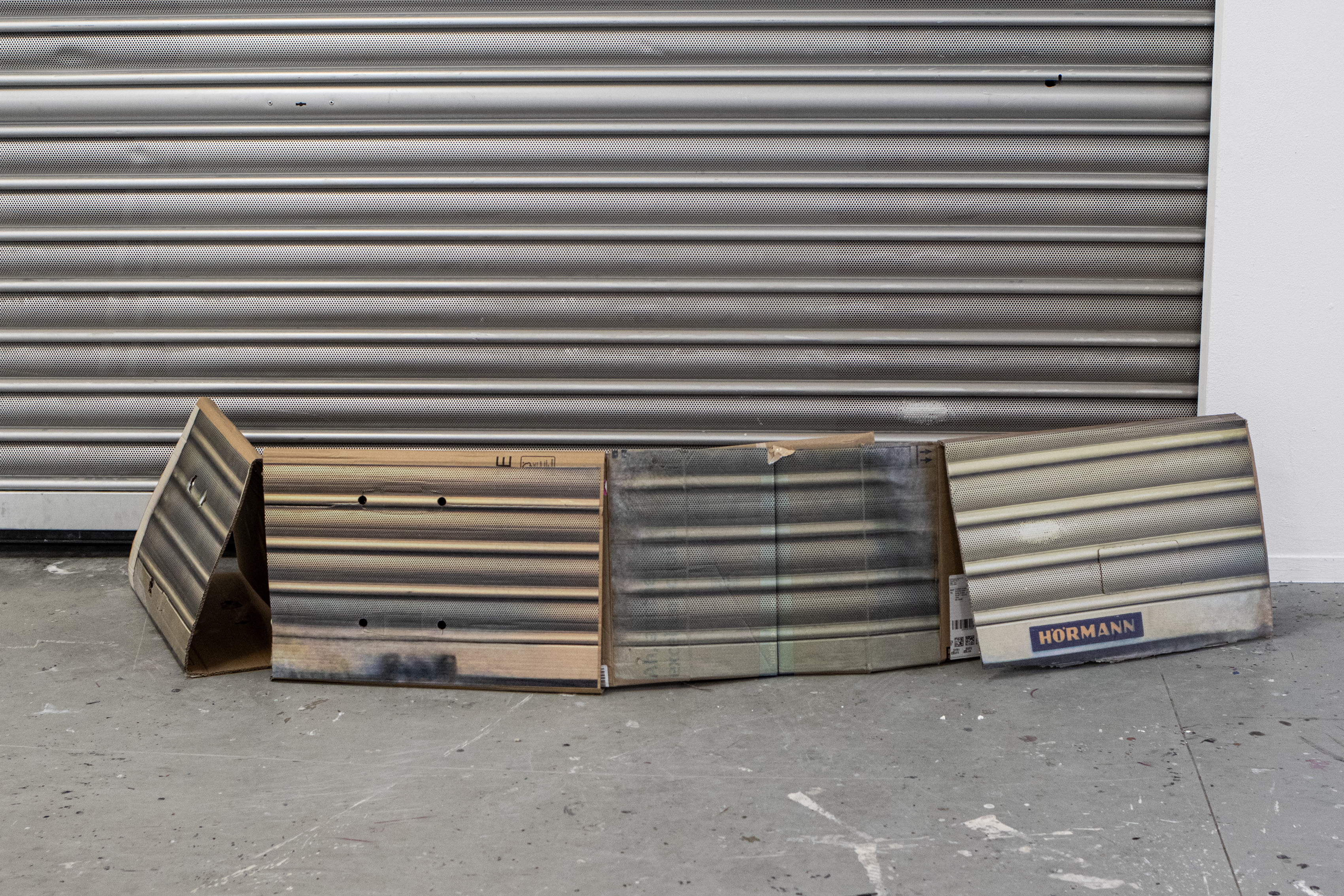
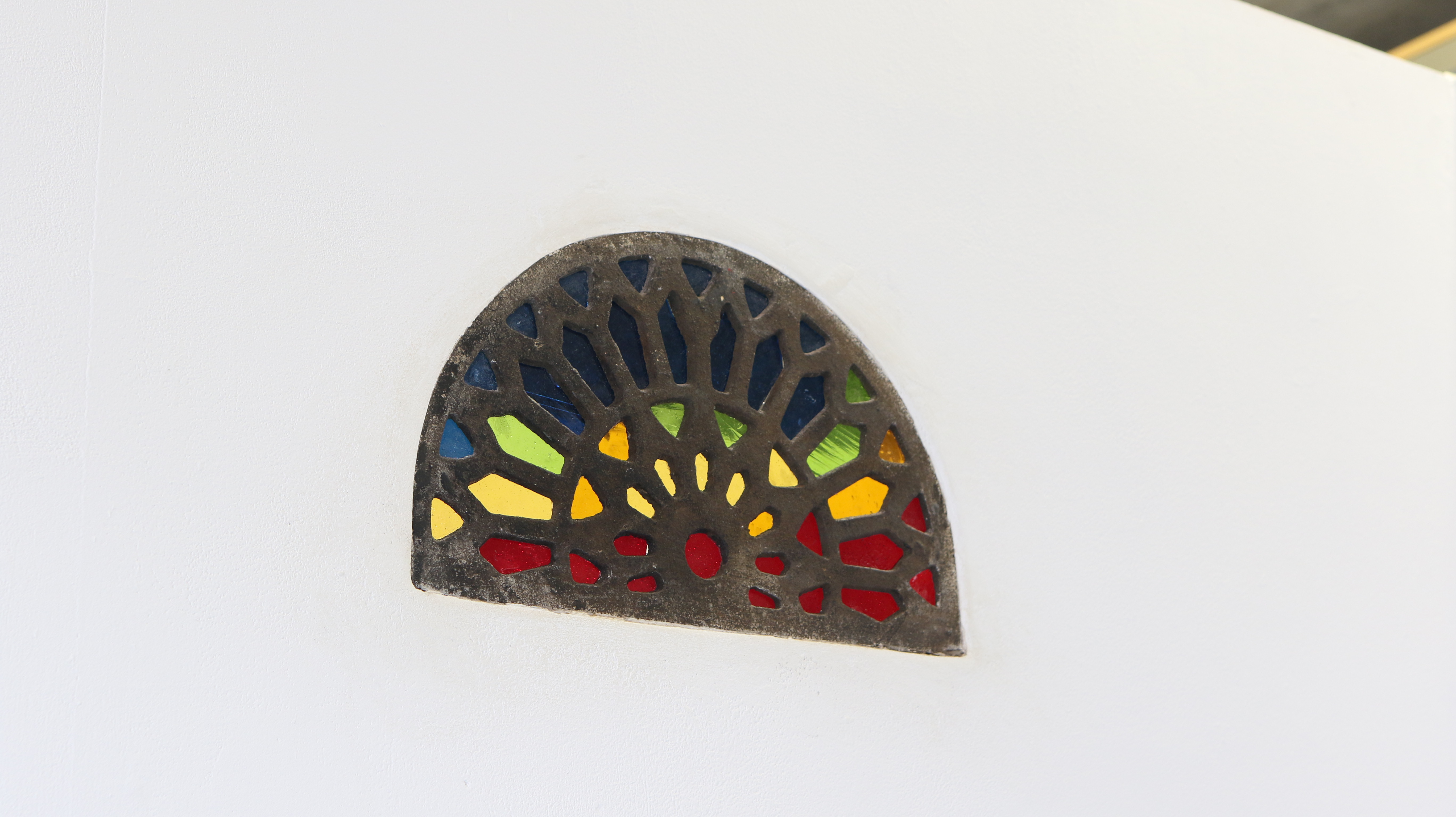
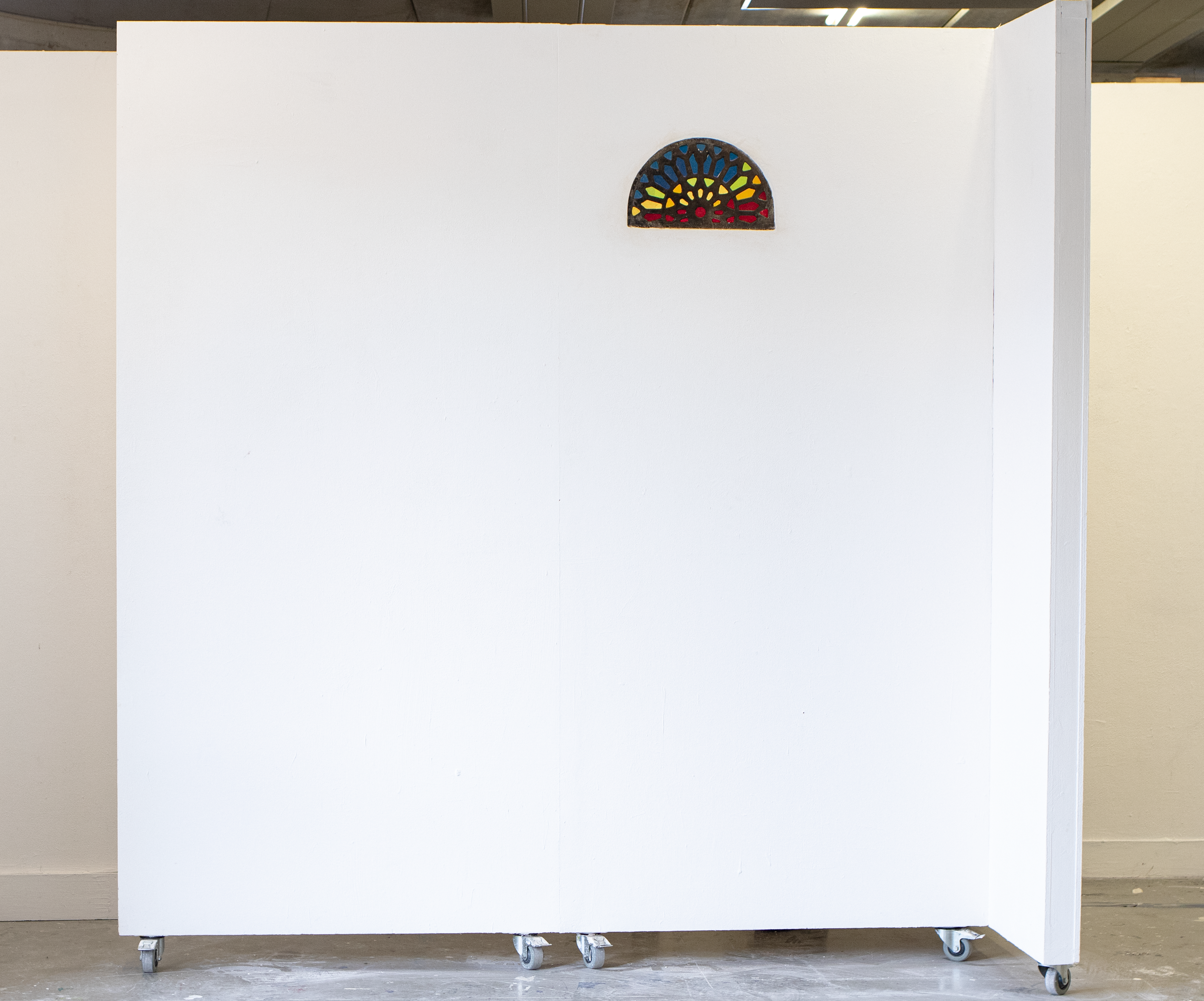
Vitrail (2024) transforms a discarded manhole cover found in Saint-Gilles into stained glass, echoing my thermal camera video Masters. By emerging urban with sacred aesthetics, the work links divine omnipresence and modern surveillance.
Manneken Pis (2024)
Cuckoo (2024)

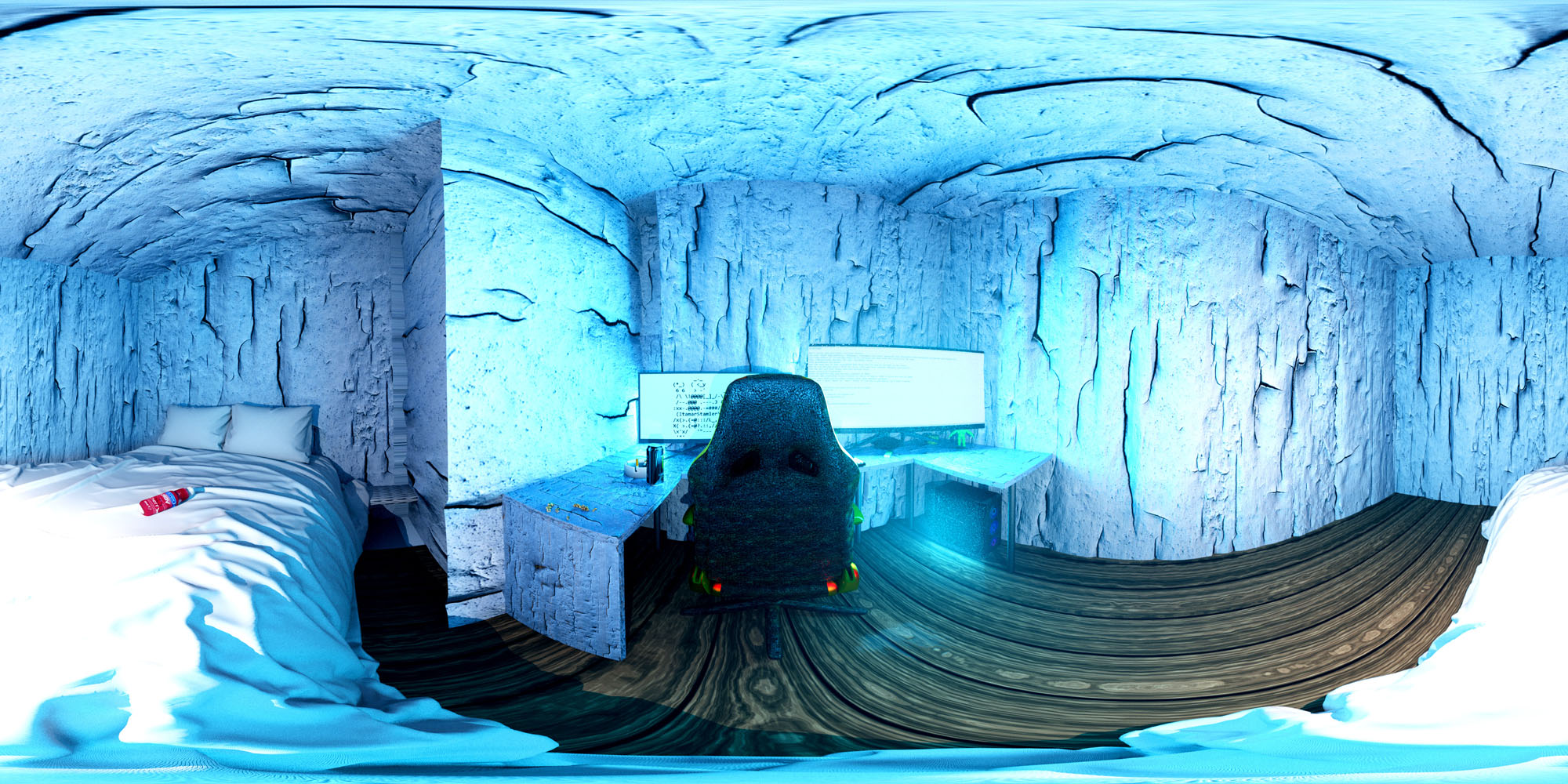
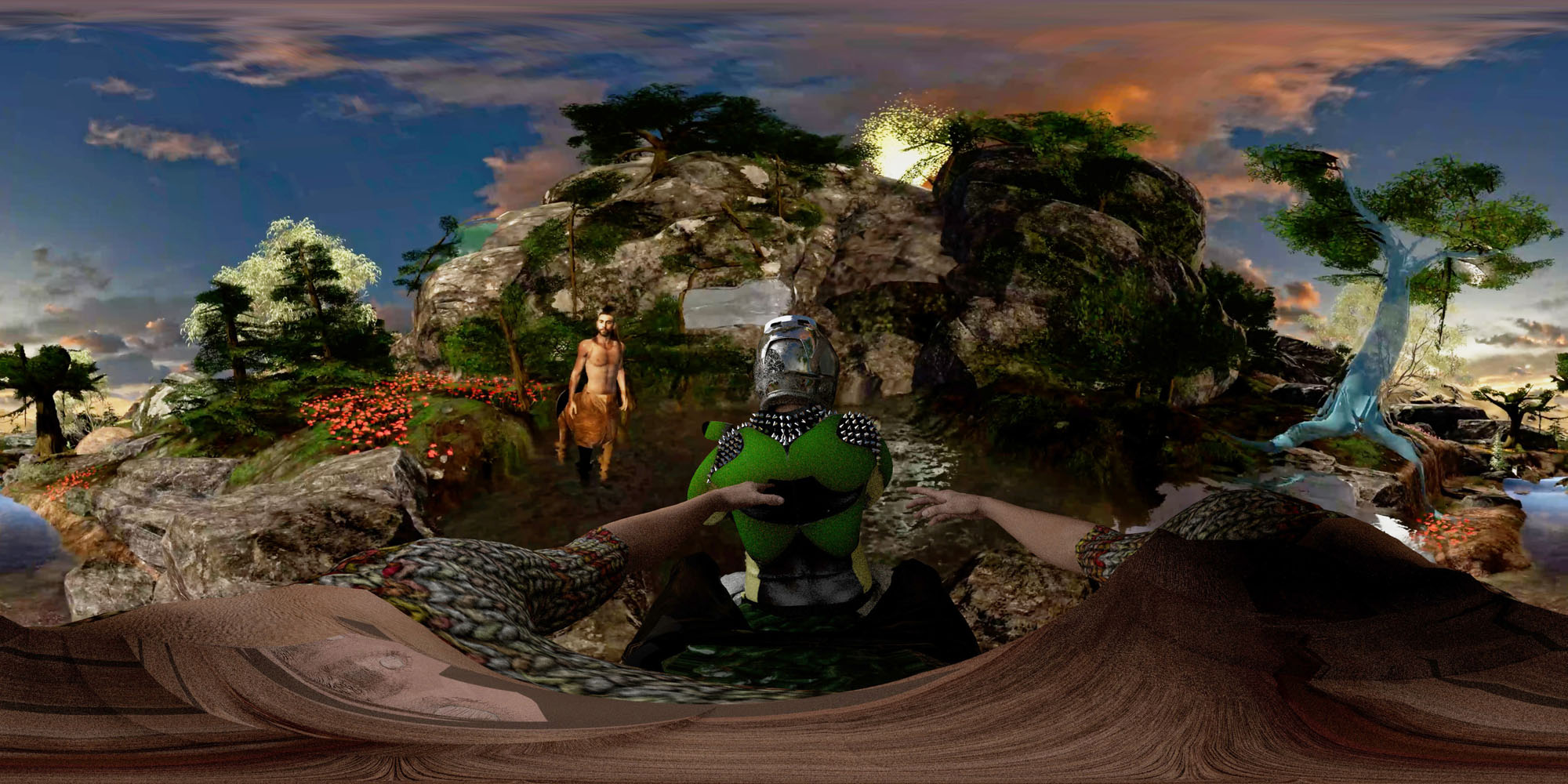


Saddle Point is a joint installation by Itamar Stamler and Inbar Hagai. It consists of an inflatable and elevated sculptural environment – a stage, an experimental facility, or a playground – out of which protrude two special seats for watching two VR pieces, one by each of the artists. Hagai created a revolving stage to protect her piece “Cecum,” while Stamler built a saddle chair to watch his work “Ransom.”
The works create two parallel layers of experience, two experiences of the journey (one vertical and one horizontal). The viewer’s body and the physical dimension assume meaning and challenge the virtual experience. Stamler and Hagai’s works move through the realms of dream, introducing the viewers to violence and catastrophe, fantasy, passion, and toxic masculinity, and exploring the relationship between the human body and the virtual space. Rather than relying on technological spectacle, the artists use VR to create a poetic experience that emphasizes movement, occurrence, and rhythm as much as the content.
The works create two parallel layers of experience, two experiences of the journey (one vertical and one horizontal). The viewer’s body and the physical dimension assume meaning and challenge the virtual experience. Stamler and Hagai’s works move through the realms of dream, introducing the viewers to violence and catastrophe, fantasy, passion, and toxic masculinity, and exploring the relationship between the human body and the virtual space. Rather than relying on technological spectacle, the artists use VR to create a poetic experience that emphasizes movement, occurrence, and rhythm as much as the content.